
Miami faculty, students stage Cook Field ‘funeral’ to protest new arena, other grievances
Protesters gathered on Cook Field on May 1 with signs depicting tombstones inscribed with the names of recently cut majors, a cardboard coffin etched with “R.I.P. Cook Field” and an “urn” – a large mason jar – full of dirt from the field.
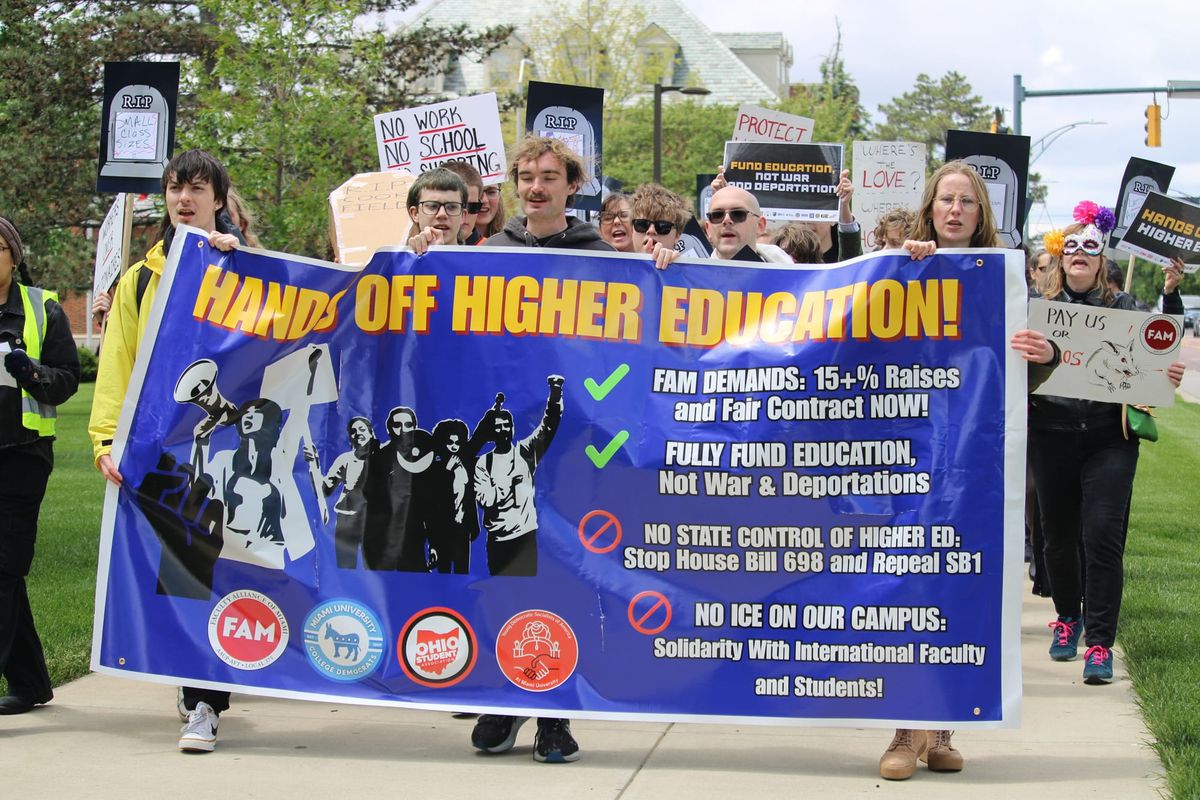
Members of the Faculty Alliance of Miami (FAM), Ohio Student Association (OSA), Young Democratic Socialists of America (YSDA) and other groups, students and faculty of Miami University hosted a “funeral” for Cook Field in protest of a $280 million arena being built on the campus green space, among other grievances with the university’s administration.
The protest was part of a nationwide May Day resistance call, according to a news release from FAM, in which higher education workers and students hosted rallies to demand the unfreezing of federal funding for science and research, the end of federal attempts to control how institutions operate and the suspension of U.S. Immigration and Customs Enforcement (ICE) activity on campuses, among other points.
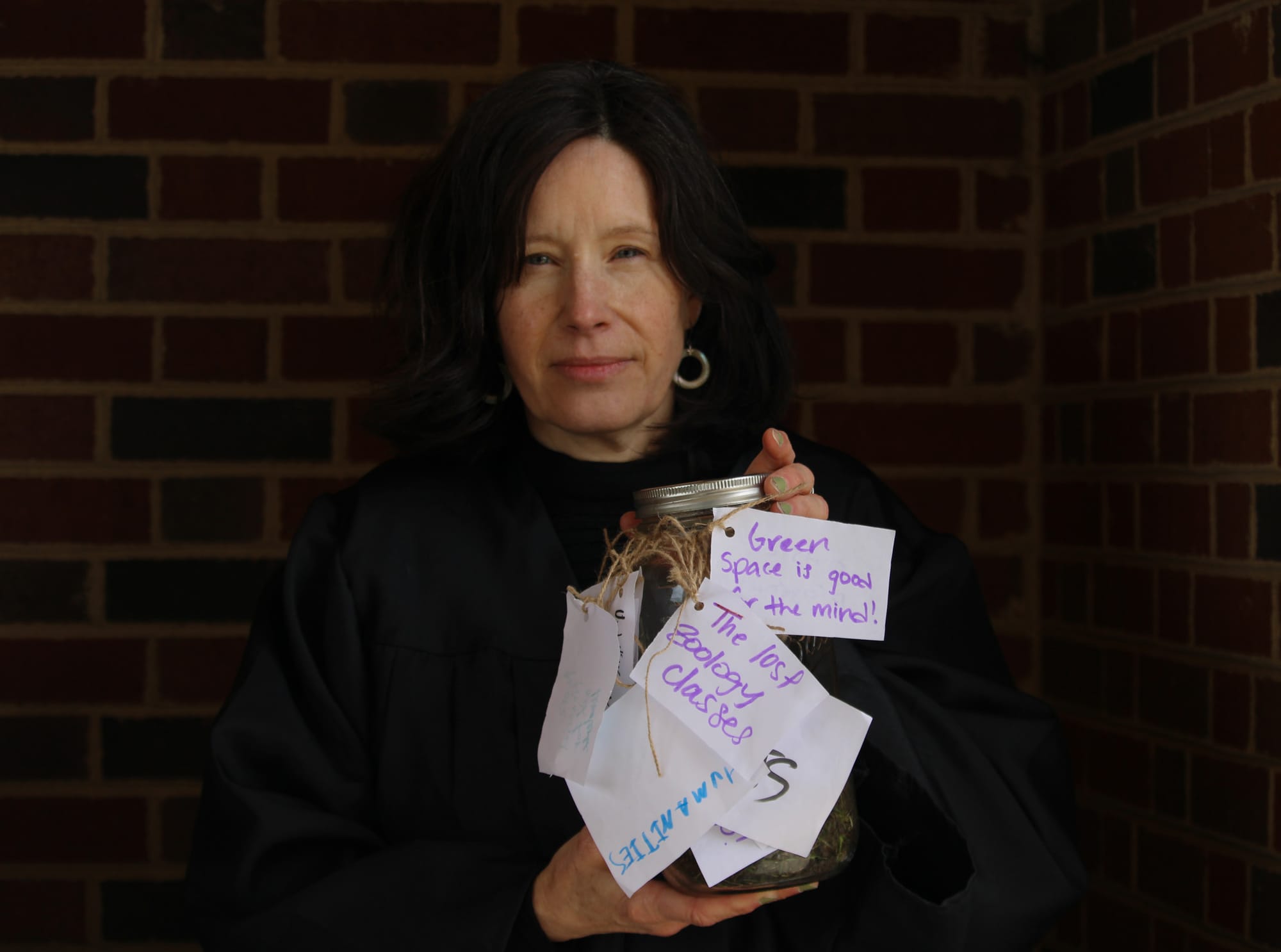
Protesters gathered on Cook Field on May 1 with signs depicting tombstones inscribed with the names of recently cut majors, a cardboard coffin etched with “R.I.P. Cook Field” and an “urn” – a large mason jar – full of dirt from the field.
The urn was decorated with several tags upon which students and faculty wrote their ideas of what they’d rather the money for the arena project go toward, including zoology classes, arts programs, humanities and maintaining the green space.
The arena
In February, the Miami Board of Trustees approved a resolution to build the multipurpose arena, including plans to take on additional debt to fund the project despite strong opposition, according to the results from two campus-wide surveys taken since early 2025.
In February 2025, the results of a site selection study conducted by a Miami committee showed more than 1,500 respondents opposed the idea of building a new arena on Cook Field.
Again this February, a group of Miami students, faculty and alumni conducted their own survey, polling local residents as well as campus community members. Results showed 89% of respondents, or 2,029 people opposed the plan.
Construction of the arena on the Cook Field is expected to be completed by fall 2028.
During the board meeting in which the arena was approved, several members of the OSA chapter of Miami showed up in protest with signs and were asked to leave the hallways of the Marcum Hotel and Conference Center, the meeting venue, and stand outside.
Listening to students
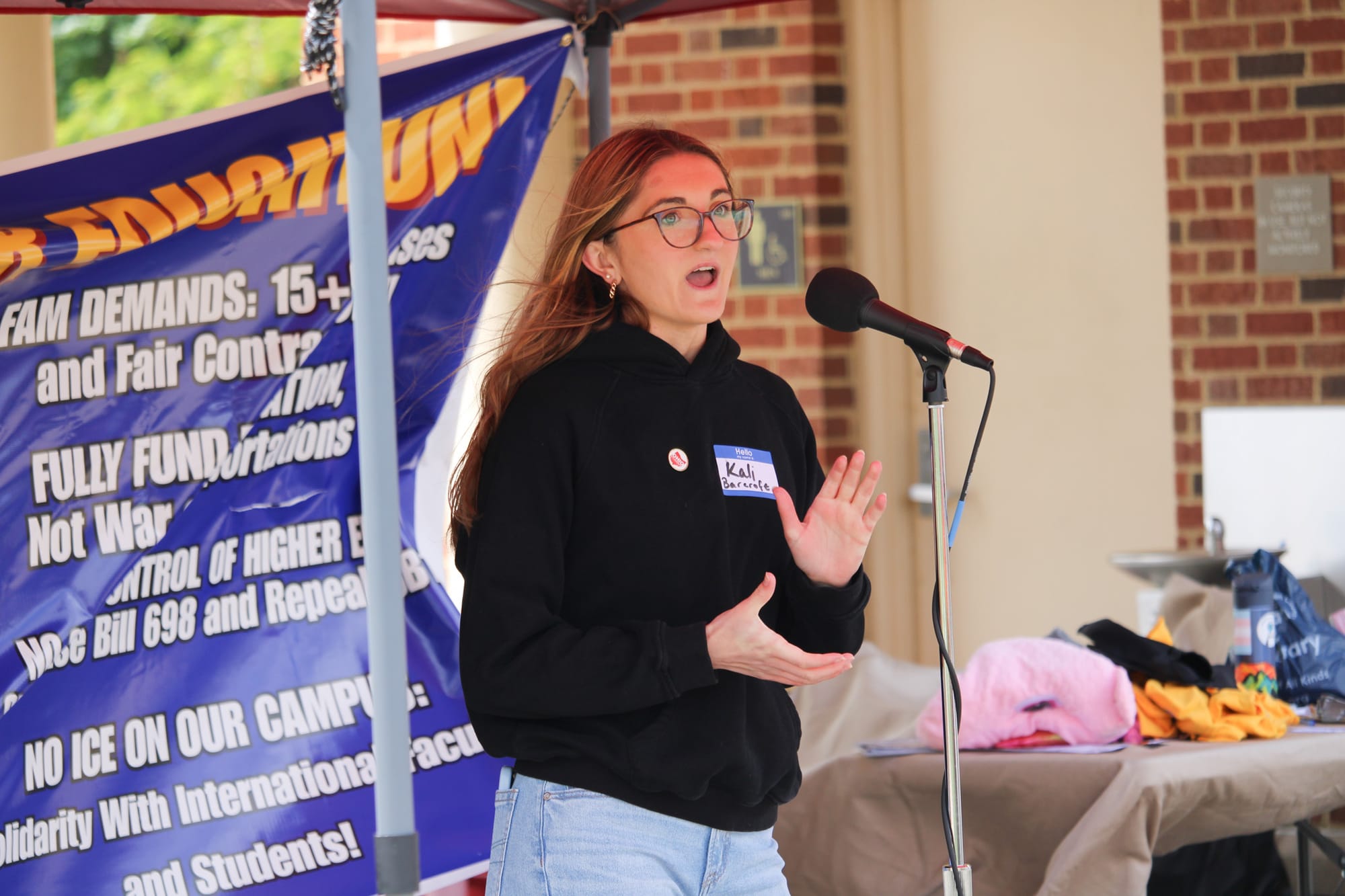
Kali Barcroft, president of the OSA chapter at Miami, kicked off the “funeral” for Cook Field. She said she felt the overall response, especially during the February board meeting, from university administrators and trustees has been “actively silencing and ignoring students” who are in protest of the arena.
Additionally, Barcroft pointed to the 76 degree programs which have been eliminated since 2020, although many have been added in the same time, saying students and faculty would rather see the money for the arena be invested in academics.
During a board of trustees meeting in September 2025, Interim Provost Chris Makaroff said the recently passed Ohio Senate Bill 1 set the minimum number of students a program should have to stay open at 20 students with the major, but programs at Miami with under 35 were eliminated.
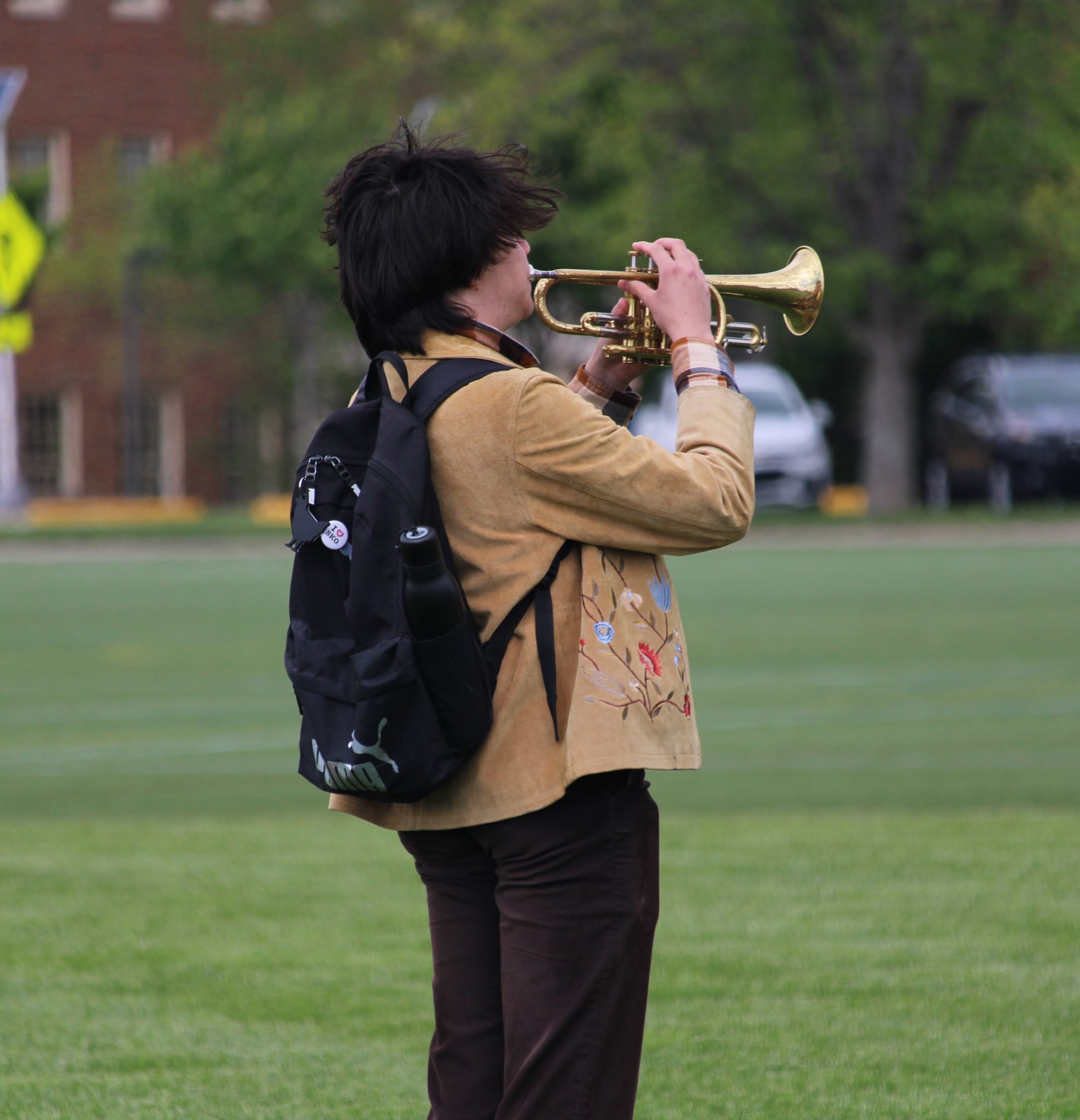
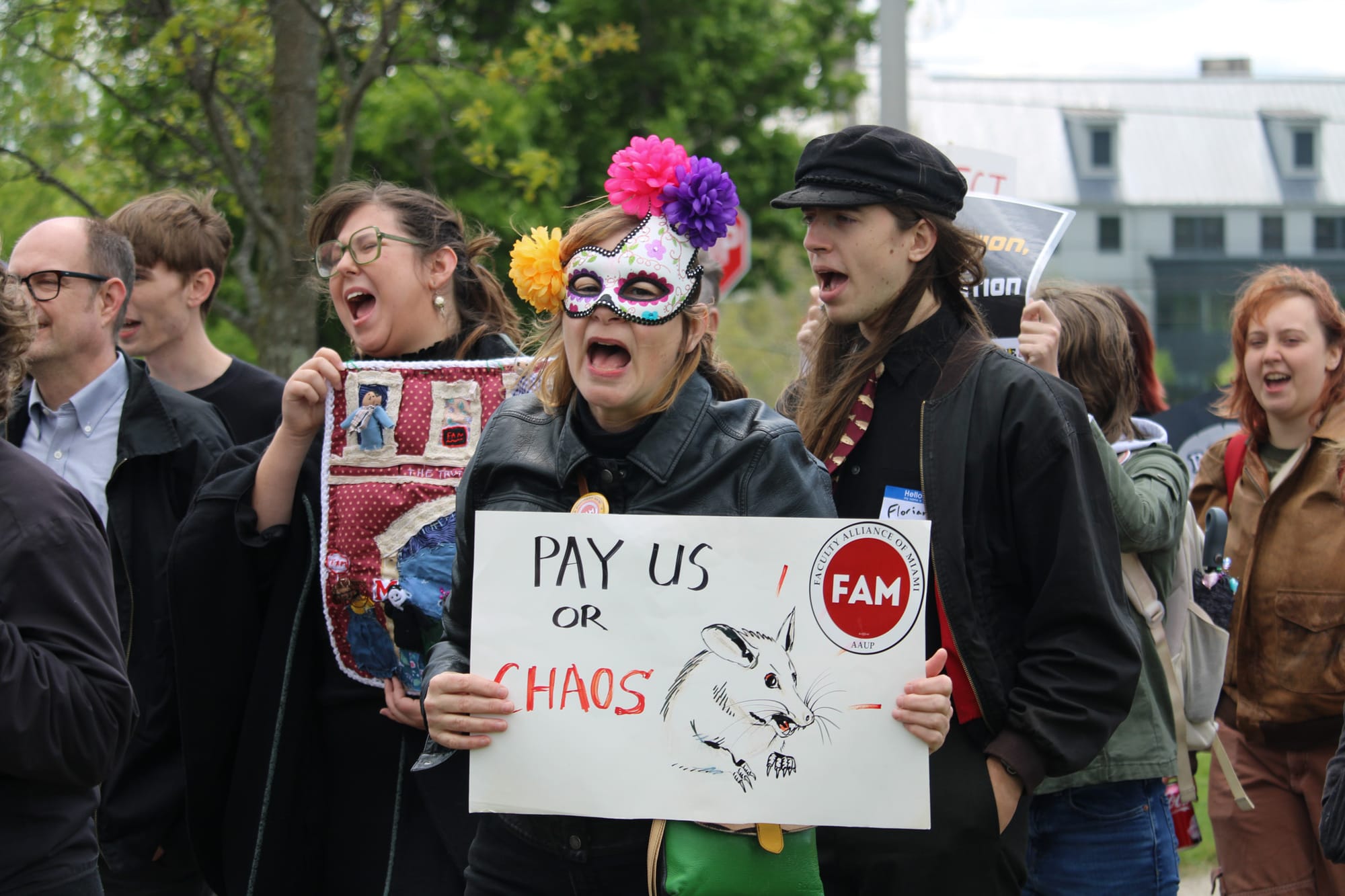
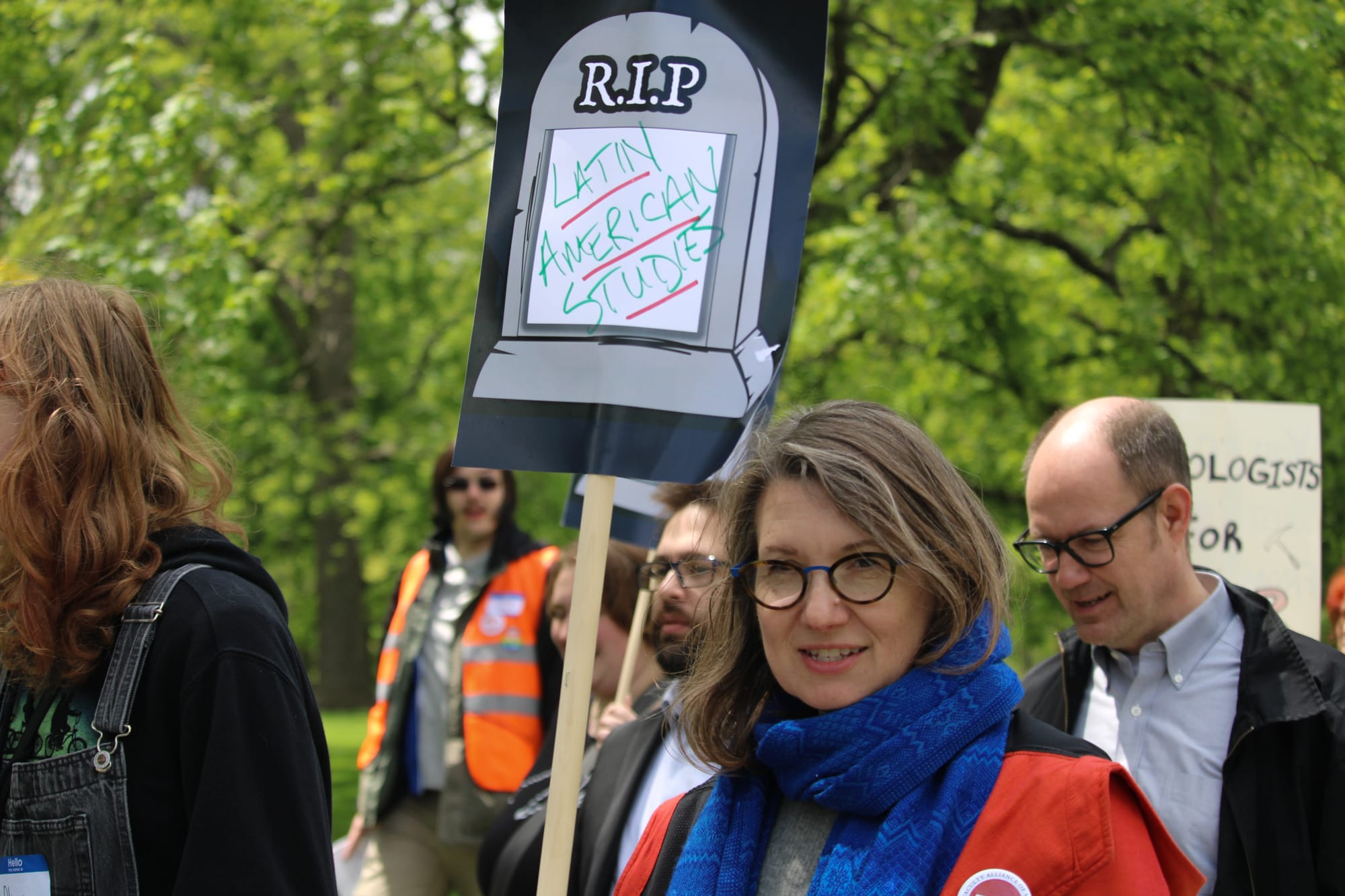
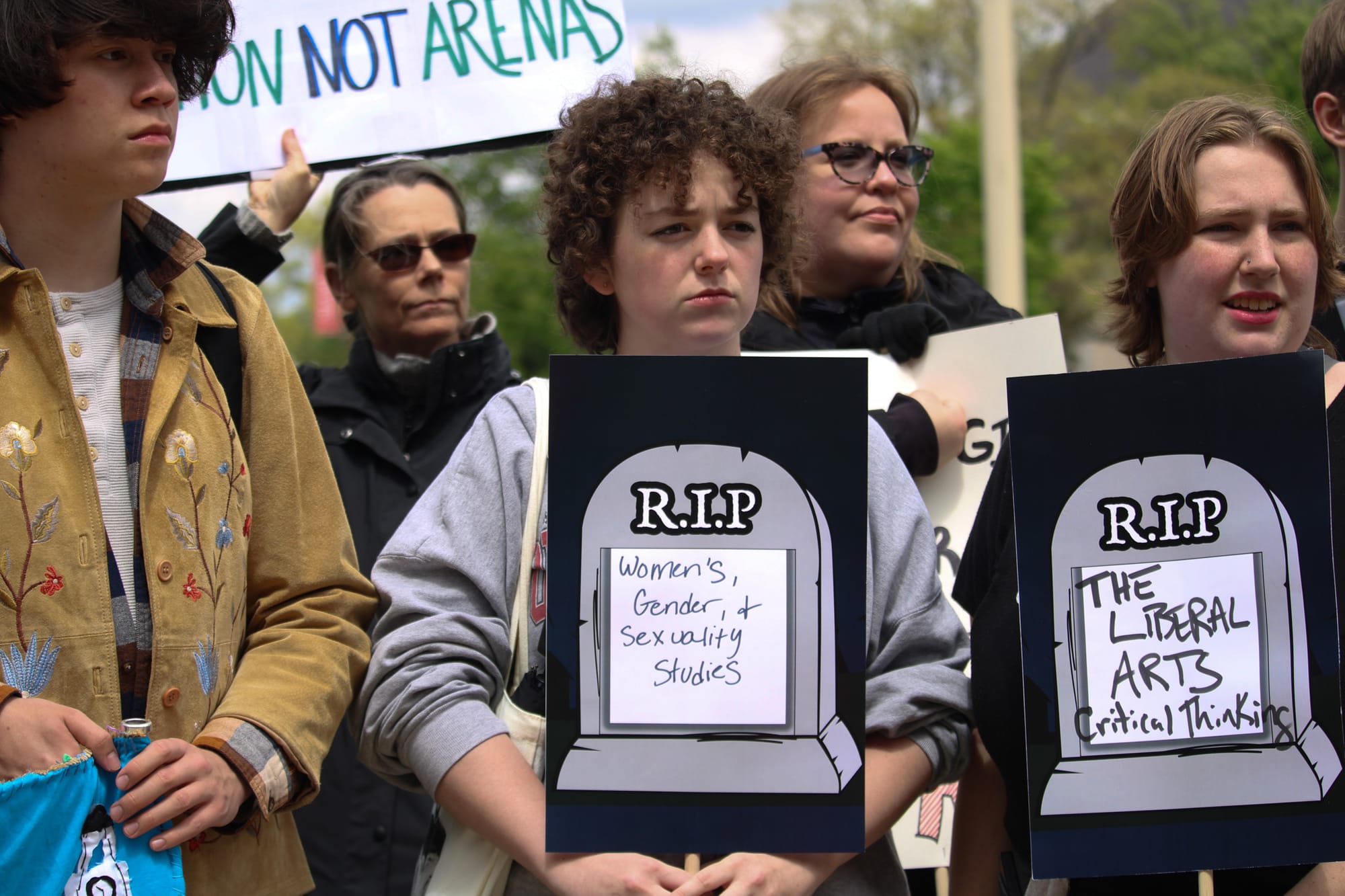
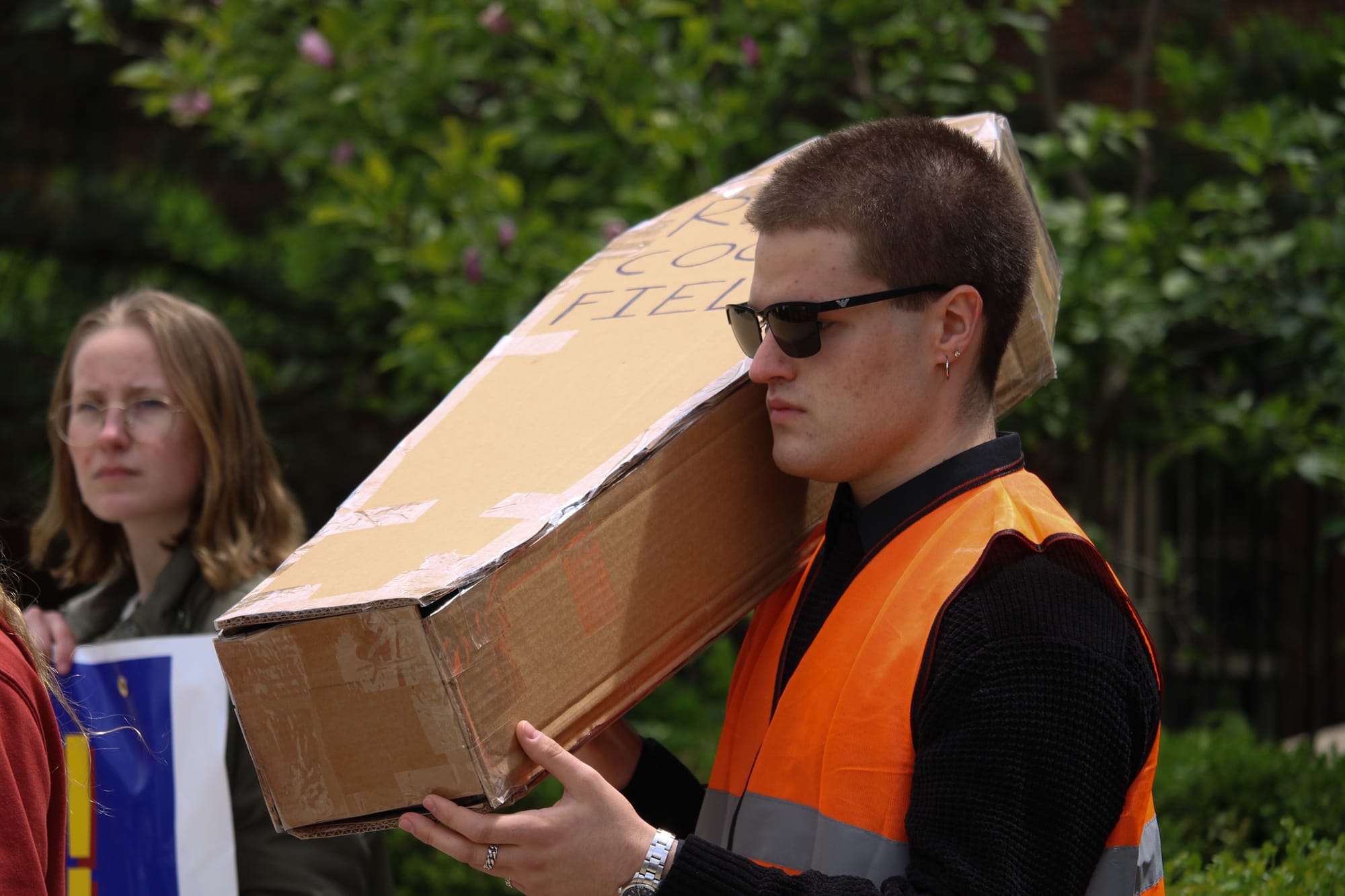
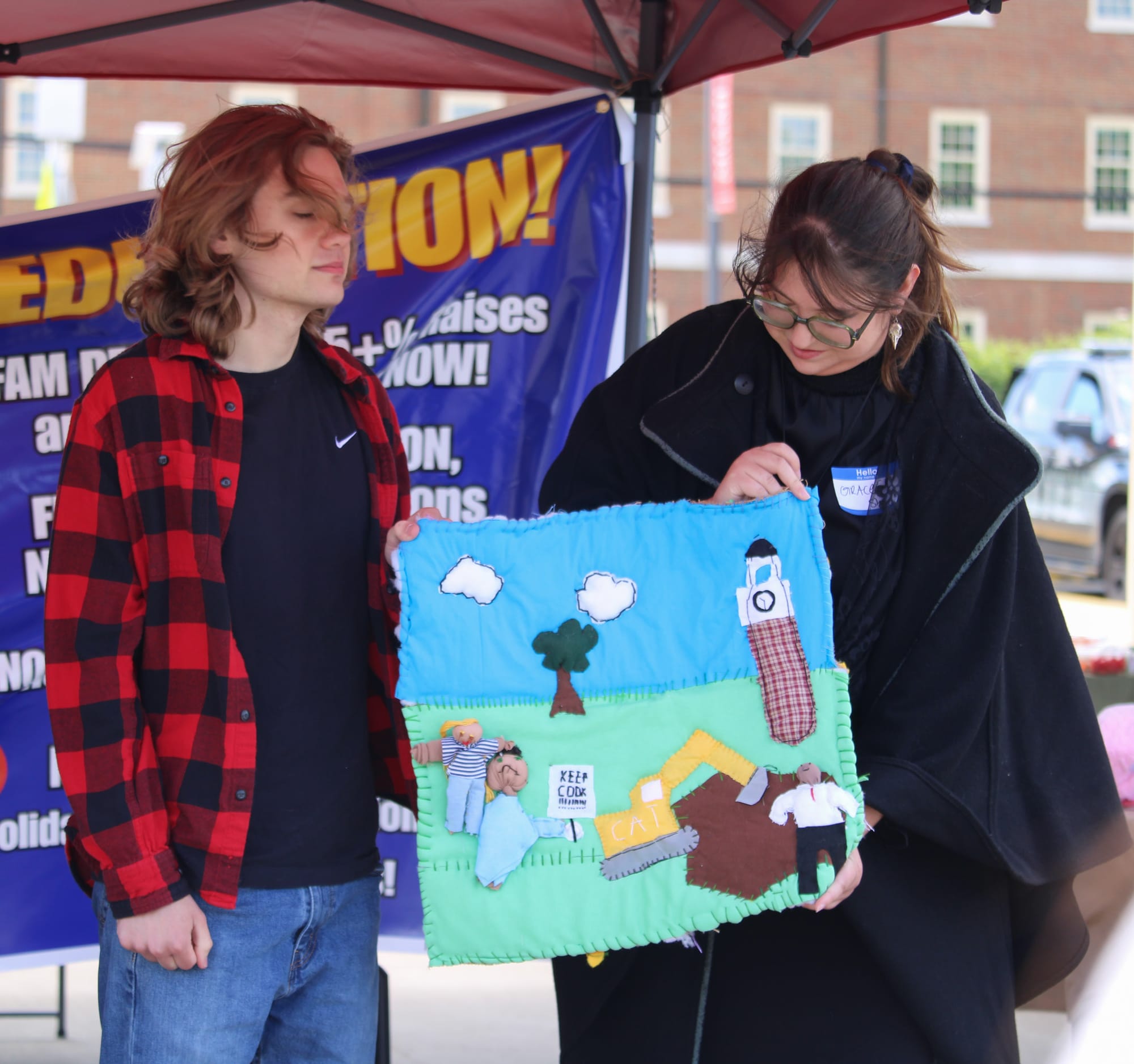
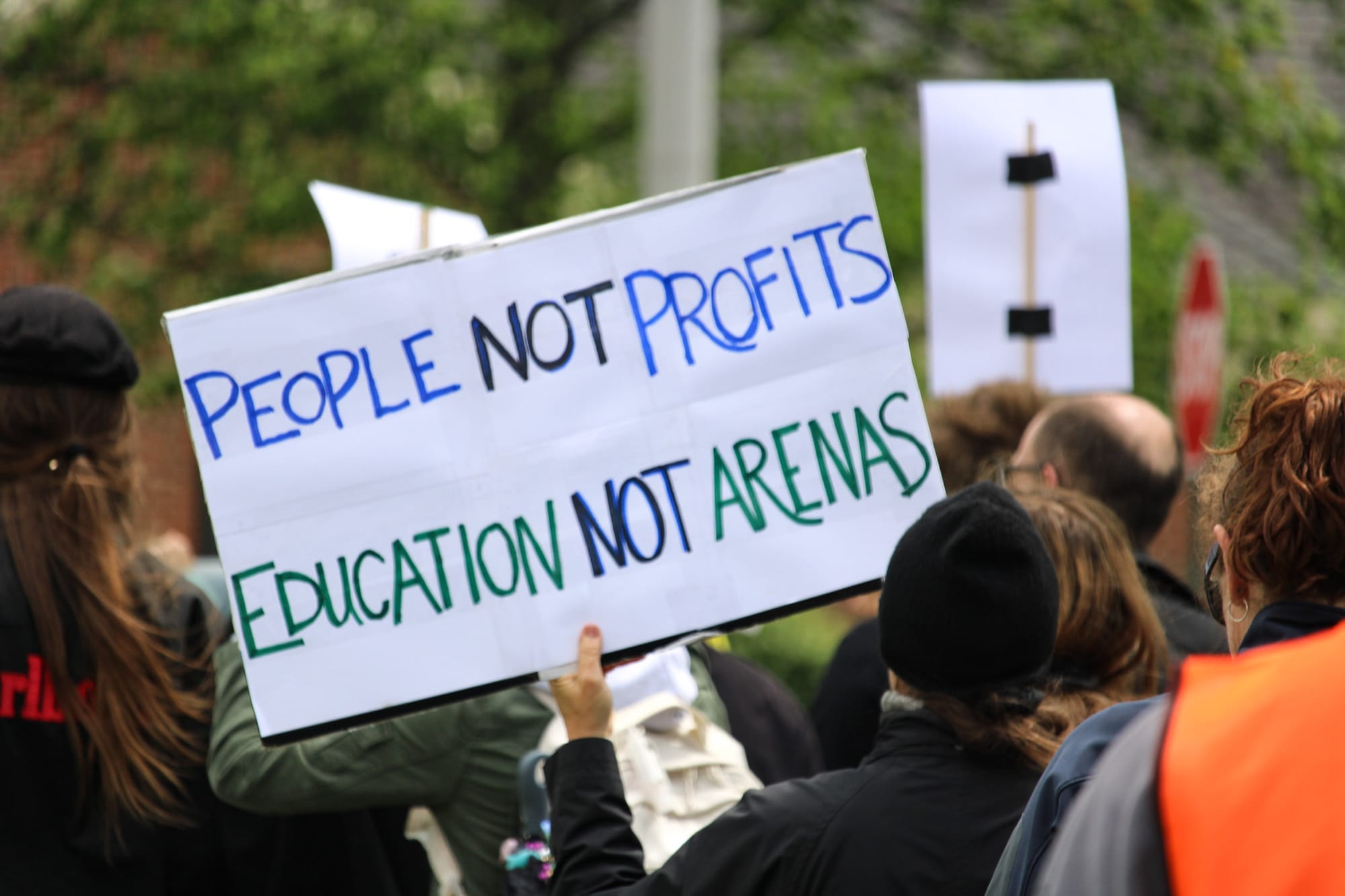
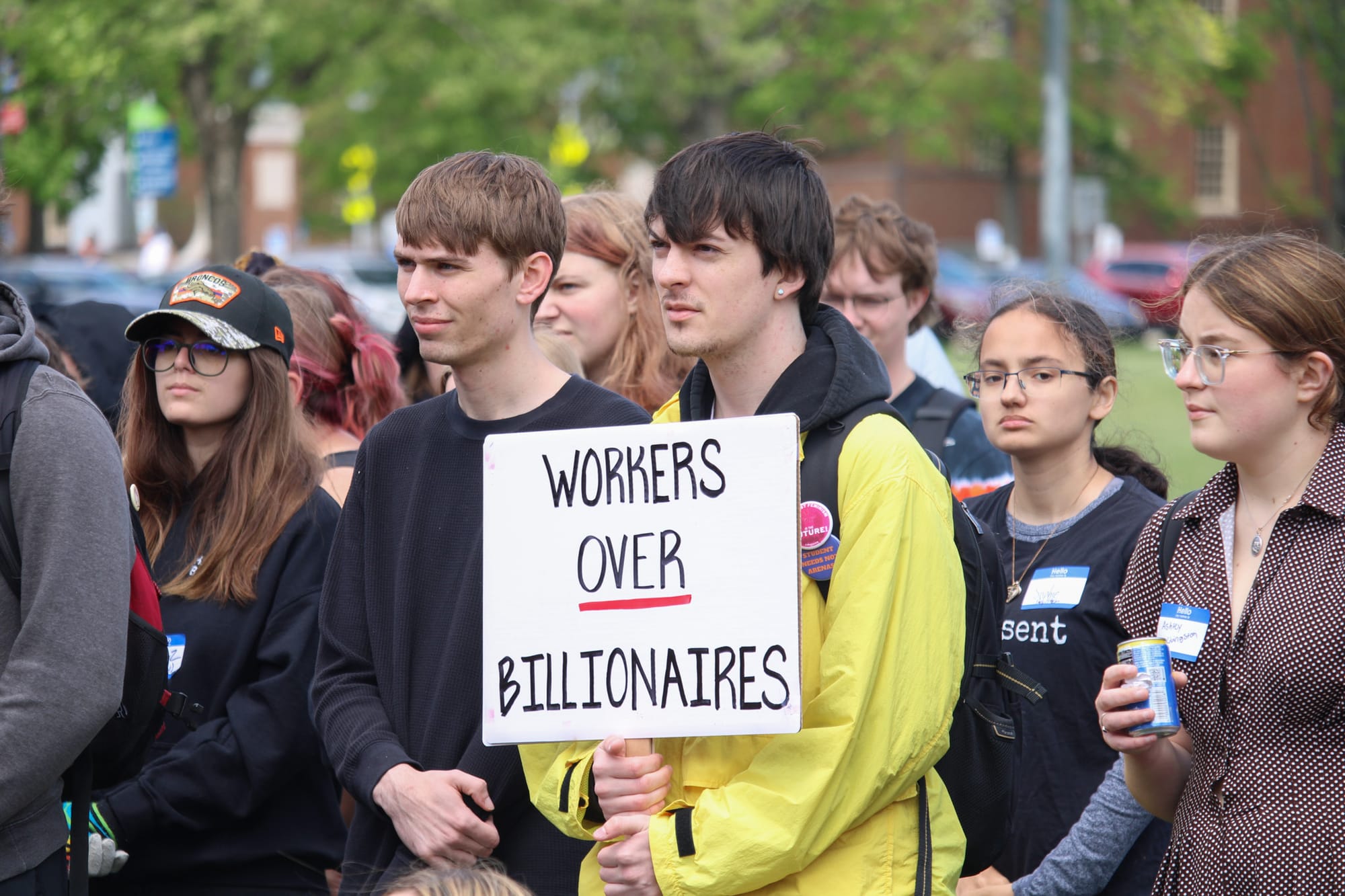
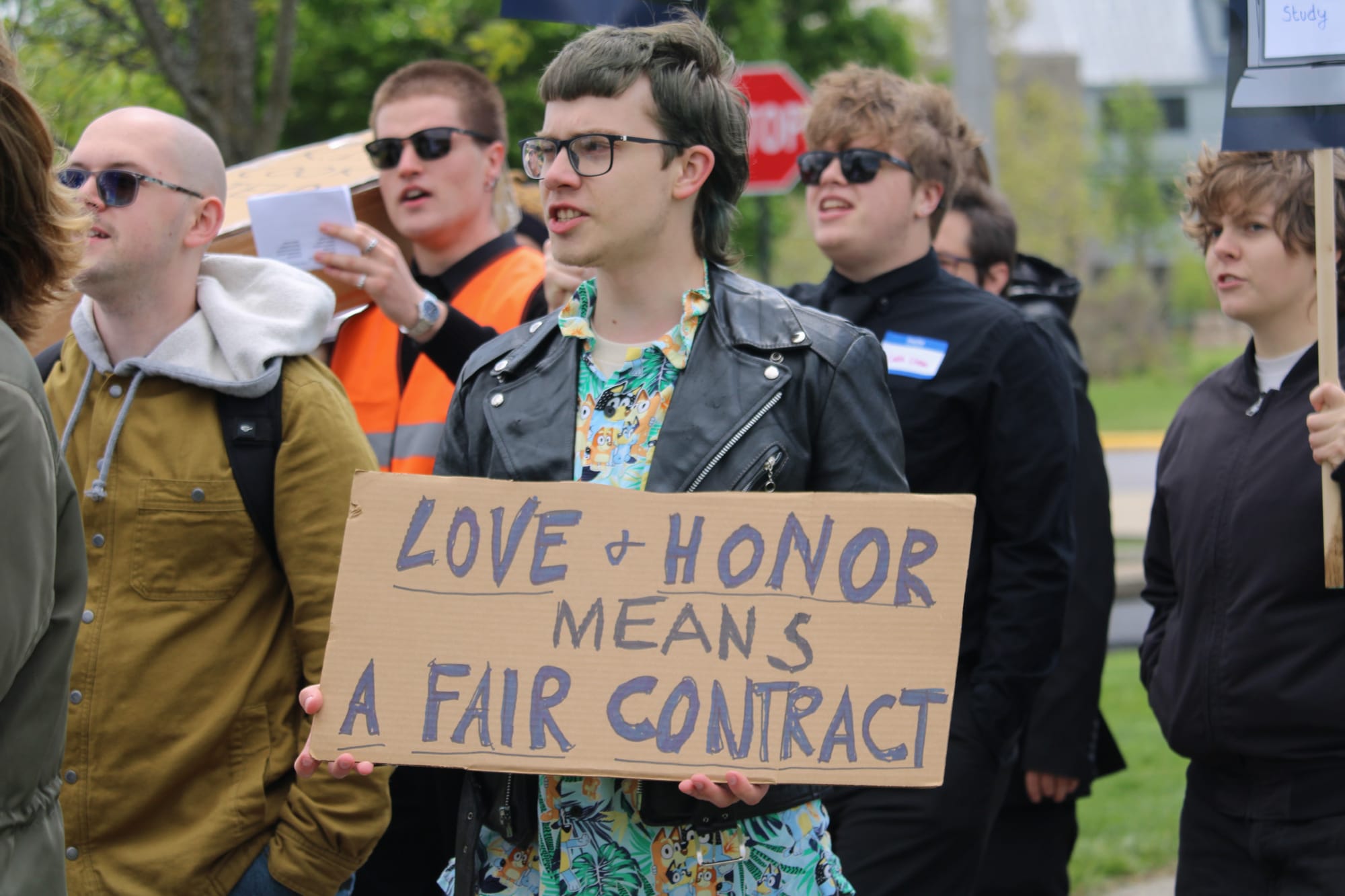
Miami University students and faculty protest against an upcoming arena project replacing campus green space, the lack of faculty pay raises and cuts to majors among other grievances on May 1, 2026. Protesters marched from Cook Field to Roudebush Hall and back. Photo by Katelyn Aluise.
Although her major was not cut, Barcroft said Cook Field has been a “monumental” part of her college experience as an intramural soccer player. As a 13-year-old, attending a soccer tournament hosted on the field was her first experience with the university.
“I understand that Millett is out of date … however, I do not think that the arena going on the only large green space we have on campus is a good choice,” Barcroft said. “I think that this will be a detrimental hit to student well-being. I just think there was a much better way to go about it, and listening to students was the better way to go about it.”
Ashley Reynolds, the outgoing vice president of the OSA chapter at Miami, said her degree program in social justice was eliminated by university administration. She said the idea that her major was cut while the university spends millions on a new arena is “unfortunate.”
Beyond cutting majors and building an arena, Reynolds said students who attended the protest on Cook Field were also there to protest the university not taking a position against ICE despite student and faculty protests, or fulfilling the recent pay raise requests of FAM.
“We do want to have all these different things, so it really just kind of boils down to students not getting listened to and kind of that culminating with this very specific thing on Cook Field,” Reynolds said. “Everyone loves Cook Field. Everyone has a memory from Miami on Cook Field, and it's just a very perfect symbolism of how students aren't being listened to right now.”
Faculty pay
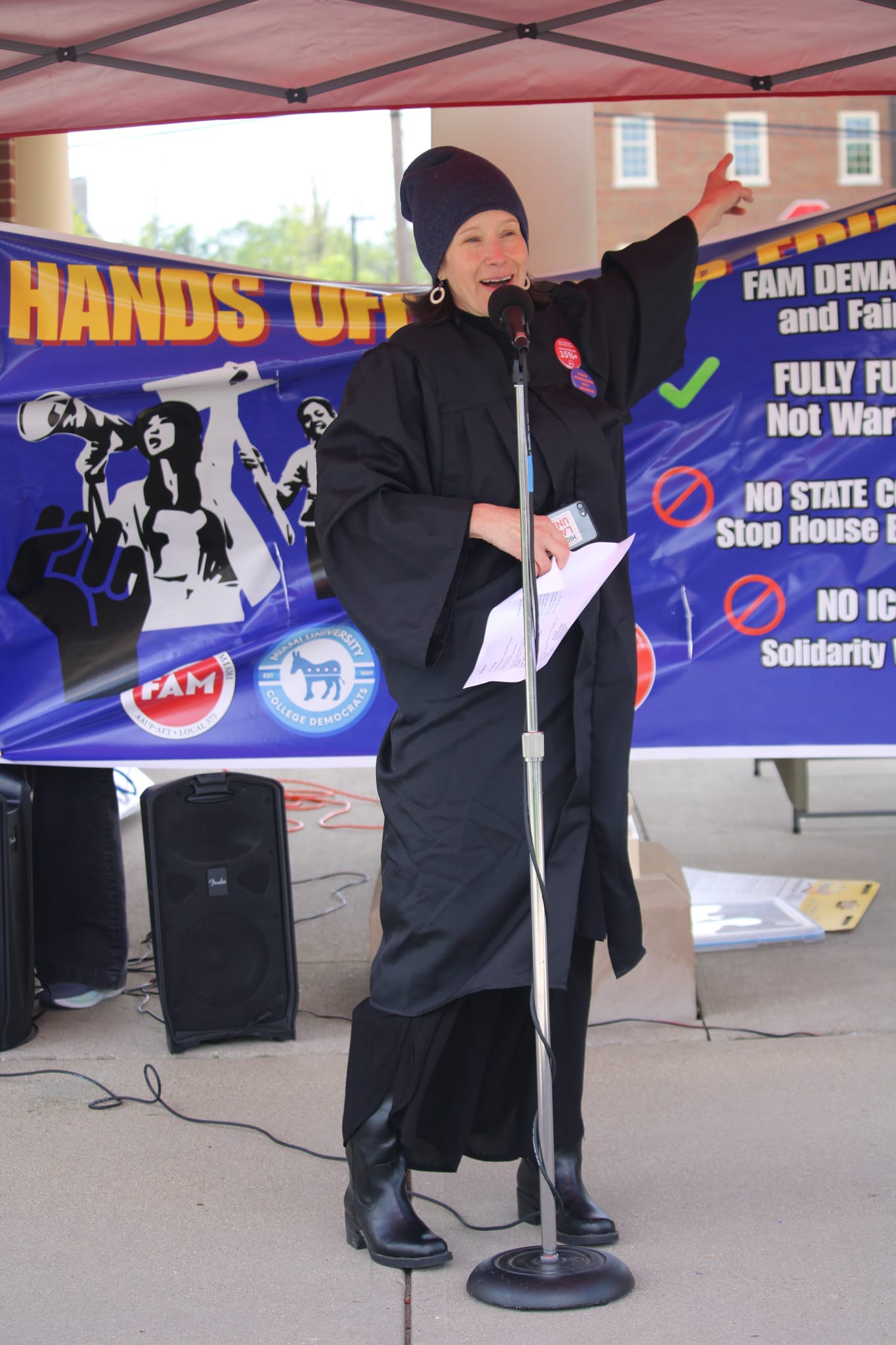
Cathy Wagner, an English professor and member of FAM, said she feels the union is being treated “pretty badly” with the offers the university has recently presented when asked for raises to compensate for rising costs of living.
Wagner said although the union is still in the process of negotiating with the university, it recently proposed a raise for members of 15% over the course of three years to keep up with inflation. In response, the university countered a flat raise of 1.25%.
“It’s extremely insulting,” Wagner said of the university’s proposal, adding faculty members’ pay is “well-below” what’s needed to keep up with inflation. “It’s further evidence that the university is not willing to invest in what makes the university valuable.”
When the Oxford Free Press asked Miami Senior Vice President for Finance and Business Services David Creamer about concerns about investing in an arena rather than academic programs or faculty pay, Creamer said, “We have to do a breath of things, and so we’re always evaluating how, what particular activities of the university should receive resources.”
Creamer said the university “certainly attempts to pay all employees at what is a market rate,” and it doesn’t want to “forego” projects which would “enhance” the institution.
“We’re making tradeoffs across a variety of decisions,” Creamer said. “When you're looking at an overall organization, we're trying to do things that optimize it long term.”
Creamer told the finance and audit committee the day before the February board of trustees meeting that a project on the scale of the arena was necessary to turn Miami’s financial outlook around.
Wagner said she’s heard for 20 years that the university doesn’t have money, but it continues to operate in the black and have a significant amount of investments, “and it is nonsense to say that they can’t afford to support programs and faculty.”
In fact, the university’s Moody’s credit rating remains at AA3, and Creamer said the university has an even greater debt capacity than what it expects to take on for the arena project. At the end of Fiscal Year 2025, a financial audit from the state of Ohio shows Miami landed with a $216 million surplus.
Creamer instead pointed to a projected “demographic cliff” for Miami’s enrollment in arguing something needed to be done to attract more students and assist the university’s future finances.
“I think Miami delivering well on education is our core mission,” Wagner said. “I think that's why parents and students would want to come here.”
Environmental concerns
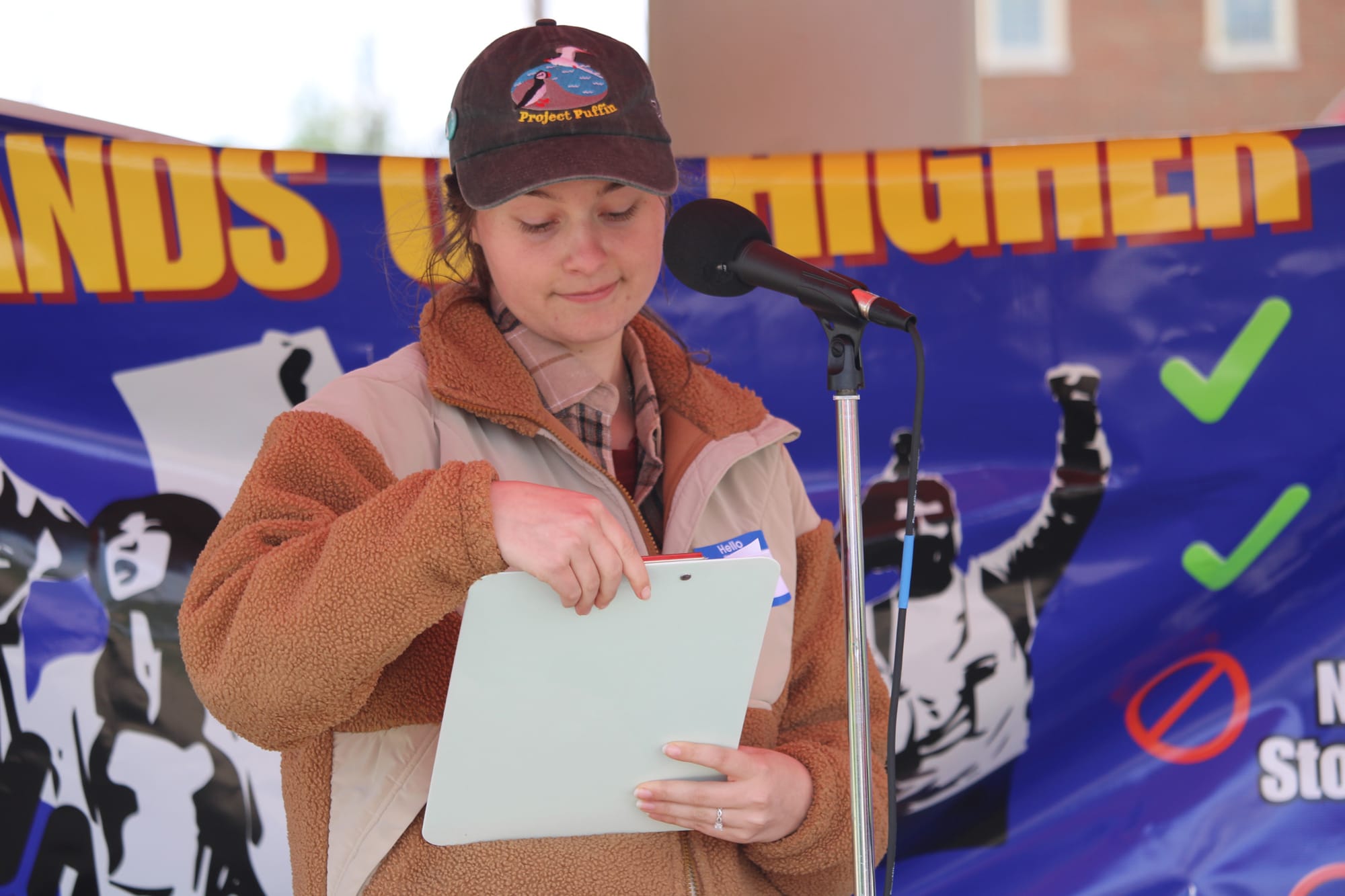
Michelle Baker, president of the Miami University Audubon Society and member of the Conservation Committee of the Ohio Ornithological Society, said she recently founded the Coalition to Represent Oxford Wildlife (CROW) as a direct result of the arena decision.
She spoke to members during the protest about a variety of environmental concerns about the arena, including that renderings of the project depicted a building with large windows which could be dangerous for local birds. She pointed out turning a large permeable space like Cook Field, which absorbs rainwater, into an impermeable structure could also create excess runoff.
Another concern, she said, is the historic trees, including a 200-year-old Osage orange tree, which currently exist in the proposed path of construction for the arena and surrounding planned developments.
“We (CROW) just want to have a say in how these solutions are, on what these solutions are and how they're implemented, because they can be done right, and they can also be done cheaply and in ways that are not best,” Baker said.
Amid several speeches by members of the Miami campus community, Wagner read a “eulogy” for Cook Field. Finally, protestors marched from Cook Field to Roudebush Hall, chanting, singing and calling on university administrators to hear their concerns.